
All great construction starts with the right tools in hand
From surface preparation to finishing, each tool and each step decides strength, precision and the final look. Here is the working method for every EMMA product, and the kit your mason should have on site.
Fixing tiles and stone
The method below applies to both Classic Grey and Maxi Plus White grades.
Check the substrate
The surface must be clean, dry, sound and level. Remove dust, oil, grease, paint and loose particles. Concrete should be cured for at least 28 days. Prime highly absorbent surfaces and repair uneven areas before you start.
Mix with clean water only
Add 5.5–6 litres of clean water per 20 kg bag. Mix with a slow-speed mixer to a lump-free creamy paste, let it stand 5 minutes, then re-mix. Never add cement or sand — it breaks the polymer balance the product was tested at.
Comb within the open time
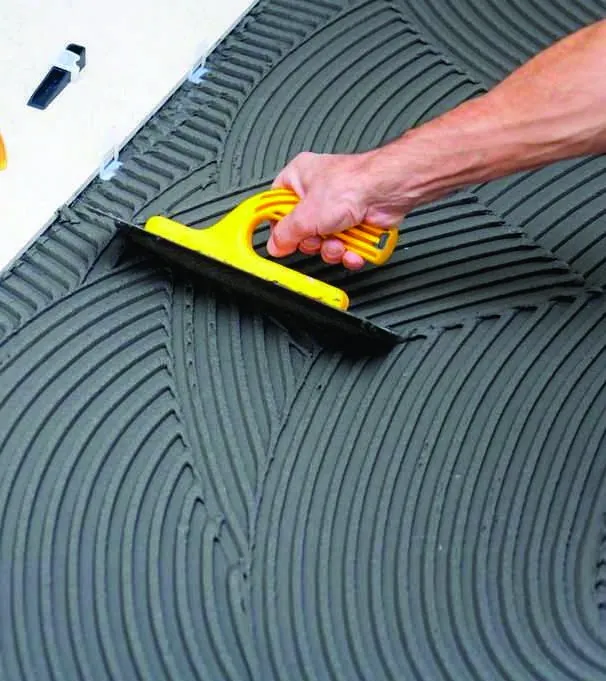
Spread the bed with the correct notch size and lay tiles within the 30–35 minute open time. If the bed has skinned over, scrape it off and re-apply — pressing harder will not bond it.
Back-butter large tiles
For tiles larger than 600×600 mm, apply adhesive to the tile as well as the substrate, so the bed is solid with no voids under the tile.
Set, level and space
Press and slightly twist each tile into place, tap with a rubber mallet, check with a spirit level and keep joints uniform with spacers. Do not soak vitrified tiles.
Protect, then grout
Protect freshly laid tiles from rain for 24 hours and grout after 24 hours. Allow 24–72 hours of curing before traffic, depending on the area.
Laying block work on a thin bed
Prepare the blocks
Blocks must be clean and free of dust. In dry weather, dampen the surface lightly — never soak it.
Mix to a smooth paste
Add mortar to clean water, mix lump-free, stand five minutes and re-mix. Use within the pot life.
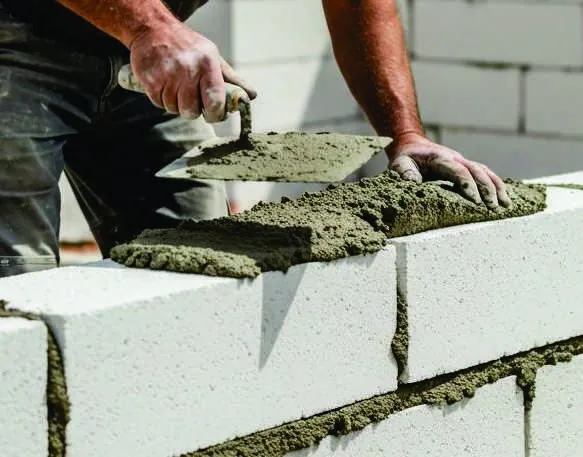
Lay a 2–3 mm bed
Comb the bed with a notched trowel, set the block, tap level with a rubber mallet and check line and level with a spirit level and line dori.
Clean up — no curing
Strike excess mortar from the joints before it sets. No water curing is required, which saves time and water on site.
Preparing a paint-ready wall
Clean and damp the surface
The wall must be clean, dust free and slightly damp. Remove loose plaster, grease and flaking paint first.
Mix 35–40% water
Add putty powder to water and mix to a smooth, lump-free paste. Pot life is 2–3 hours.
First coat, then dry 4–6 hours
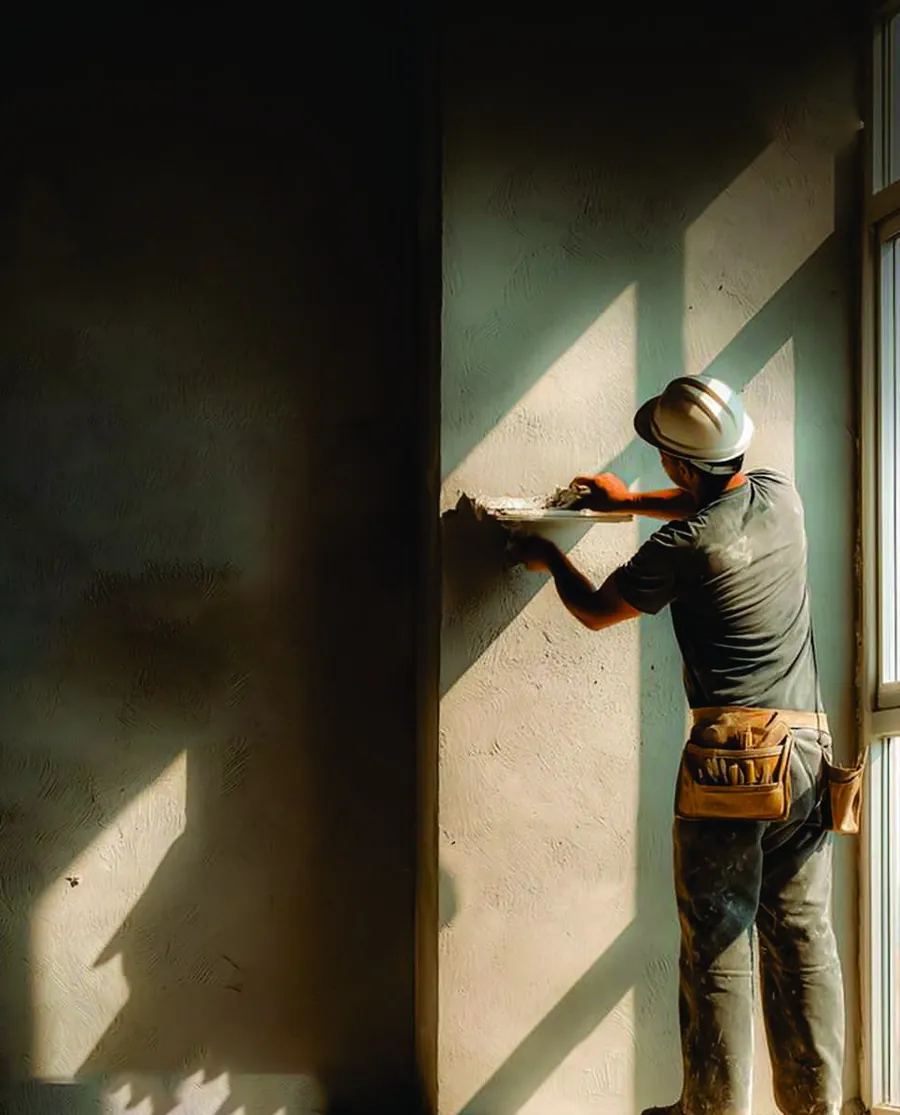
Apply evenly with a putty blade or trowel, keeping the coat to 1–1.5 mm. Thick coats crack.
Second coat and sand
Apply the second coat, let it dry completely, then sand lightly and dust off before painting.
What your mason should have on site
Surface preparation
Wire brush, scraper, sanding paper or block, air blower or brush for dust removal.
Measuring & mixing
Mechanical mixer or drill with paddle, weighing scale, mixing tray or tub, measuring bucket.
Wall putty application
Putty blade, steel trowel, hawk board.
AAC block joining mortar
Notched trowel, masonry trowel, rubber mallet, spirit level, line dori.
Tile adhesive application
Notched trowel (appropriate notch size), tile spacers, rubber mallet, spirit level.
Finishing
Sponge, cloth, finishing trowel.
Curing & cleaning
Water spray bottle or hose, bucket, cleaning brush.
Safety gear
Gloves, safety goggles, mask, safety shoes.
Six mistakes that cost you the job
Adding cement or sand
EMMA products are factory blended. Site additions change the polymer ratio and reduce bond strength — the most common cause of hollow, debonding tiles.
Working past the open time
If the comb marks have skinned over, the tile will not wet out. Scrape the bed off and re-apply rather than pressing harder.
Soaking vitrified tiles
Vitrified and porcelain tiles have near-zero absorption. Soaking leaves a water film that works against the adhesive.
Spot-fixing large tiles
Five blobs of adhesive leave voids. Large format tiles need a full combed bed plus back-buttering, or they crack under point loads.
Grey adhesive under white marble
Grey cement shadows through translucent and light-coloured stone. Use a Maxi Plus White grade for marble, quartz and glass mosaic.
Painting over damp putty
Let the second coat dry completely and sand before paint. Trapped moisture shows up later as patches and peeling.
Application questions
Can I add cement or sand to make the adhesive stronger?
What notch size should the trowel be?
How much water goes into one bag?
How long before grouting and foot traffic?
Do I need to soak the tiles before fixing?
What happens if the adhesive skins over before I lay the tile?
Need a demo for your site team?
Our technical team can walk your masons through mixing, notch selection and curing on site.