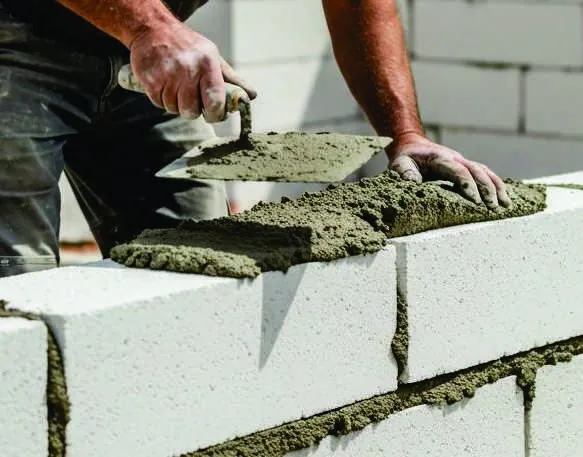
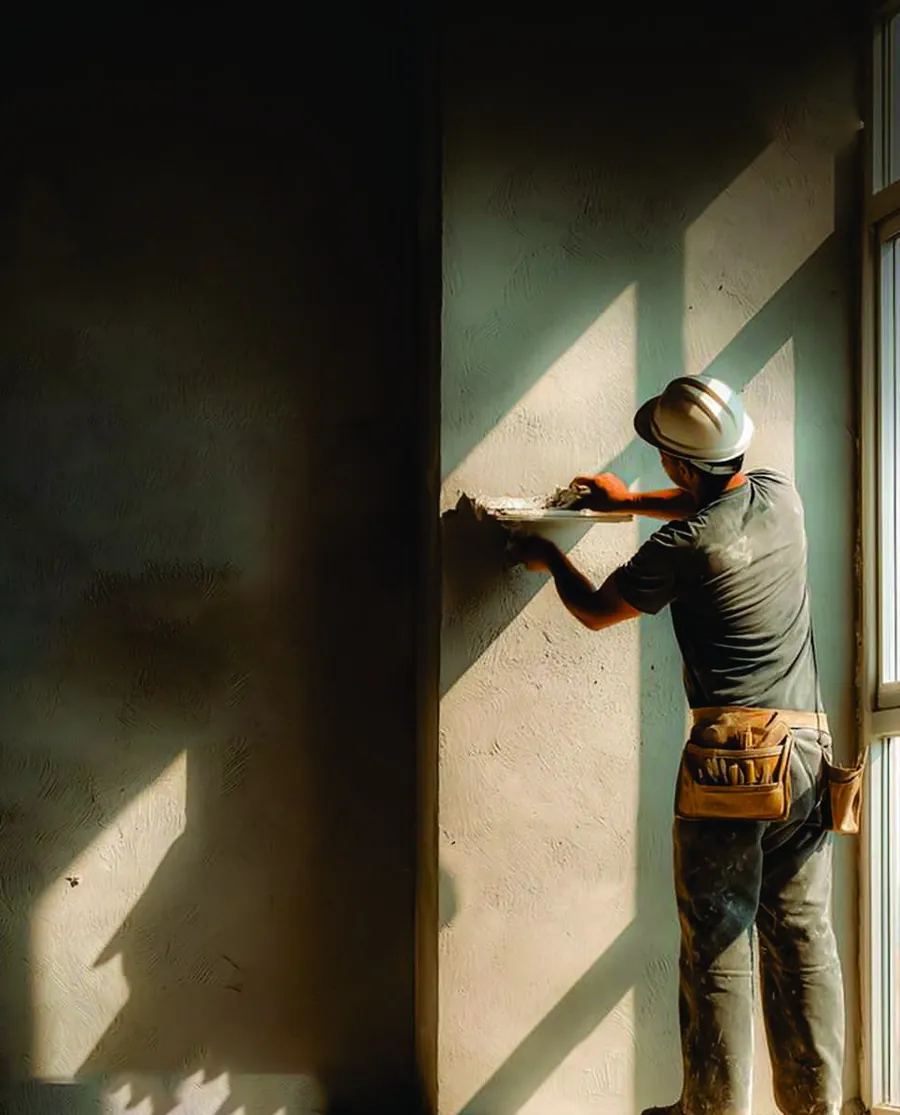
Putty is not decoration. It is the layer that fills micro-cracks, levels uneven plaster and gives paint a smooth, uniformly absorbent surface to sit on. Skip it, and the paint reveals every trowel mark and hairline crack in the plaster — and soaks in unevenly, so you need more coats.
What white cement putty actually does
- Fills micro-cracks that would otherwise telegraph through the paint film.
- Levels the ripples left by plastering.
- Whitens. At 90–92% whiteness, a putty base makes the paint colour read true, especially pastel and light shades.
- Reduces paint consumption by closing the surface, so the paint sits on top instead of soaking in.
- Resists water, which matters on exterior walls and in humid interiors.
Applying it properly
- Prepare. The wall must be clean, dust free and slightly damp. Remove loose plaster, grease and flaking old paint. New plaster should be cured before putty goes on.
- Mix. Add putty powder to clean water at 35–40% water by weight, and mix to a smooth, lump-free paste. Use within the 2–3 hour pot life.
- First coat. Apply evenly with a putty blade or steel trowel, keeping the coat to 1–1.5 mm. Thicker is not better — thick coats crack.
- Dry 4–6 hours. Do not rush the second coat onto a damp first coat.
- Second coat. Apply, let it dry completely, then sand lightly with fine paper for a smooth finish.
- Dust off and paint. Remove sanding dust completely — primer and paint will not bond to dust.
Coverage and ordering
Work on 15–18 sq ft per kg for two coats, which is roughly 600–720 sq ft from a 40 kg bag. A rough or very absorbent plaster will consume more. Add 10% for wastage on a typical site.
Common mistakes
- Applying over damp or green plaster. Trapped moisture shows up later as patches and peeling.
- One thick coat instead of two thin ones. This is the main cause of cracking putty.
- Painting without sanding. The finish is only as smooth as the sanded surface beneath it.
- Over-sanding through the coat, which exposes plaster and gives you patchy absorption again.
- Mixing more than can be used in the pot life. Stiffened putty cannot be revived with water.
Interior and exterior
Cement-based white putty works on both, and on ceilings, concrete and cement-plastered surfaces. It is developed in accordance with IS 17545:2021 and ASTM references, and is compatible with emulsion, acrylic, distemper and texture coatings.
Read next
- Tile Adhesive vs Cement Mortar: Which Is Better for Fixing Tiles?
- Tile Adhesive Type 1, Type 2 and Type 3: What the Difference Actually Means
- Tile Adhesive Coverage: How Many Bags per 100 sq ft?
Browse the full EMMA product range, check the application guide, or ask our technical team about your site.