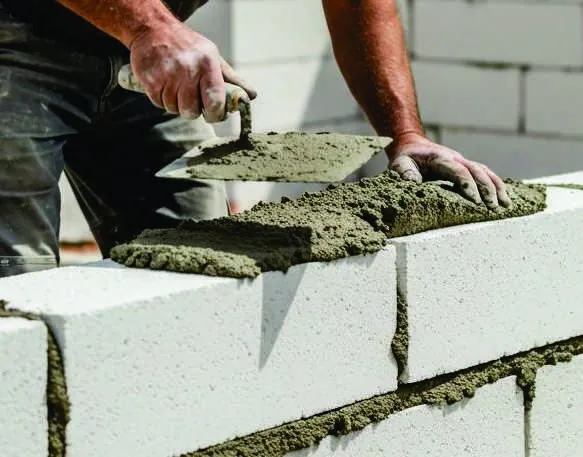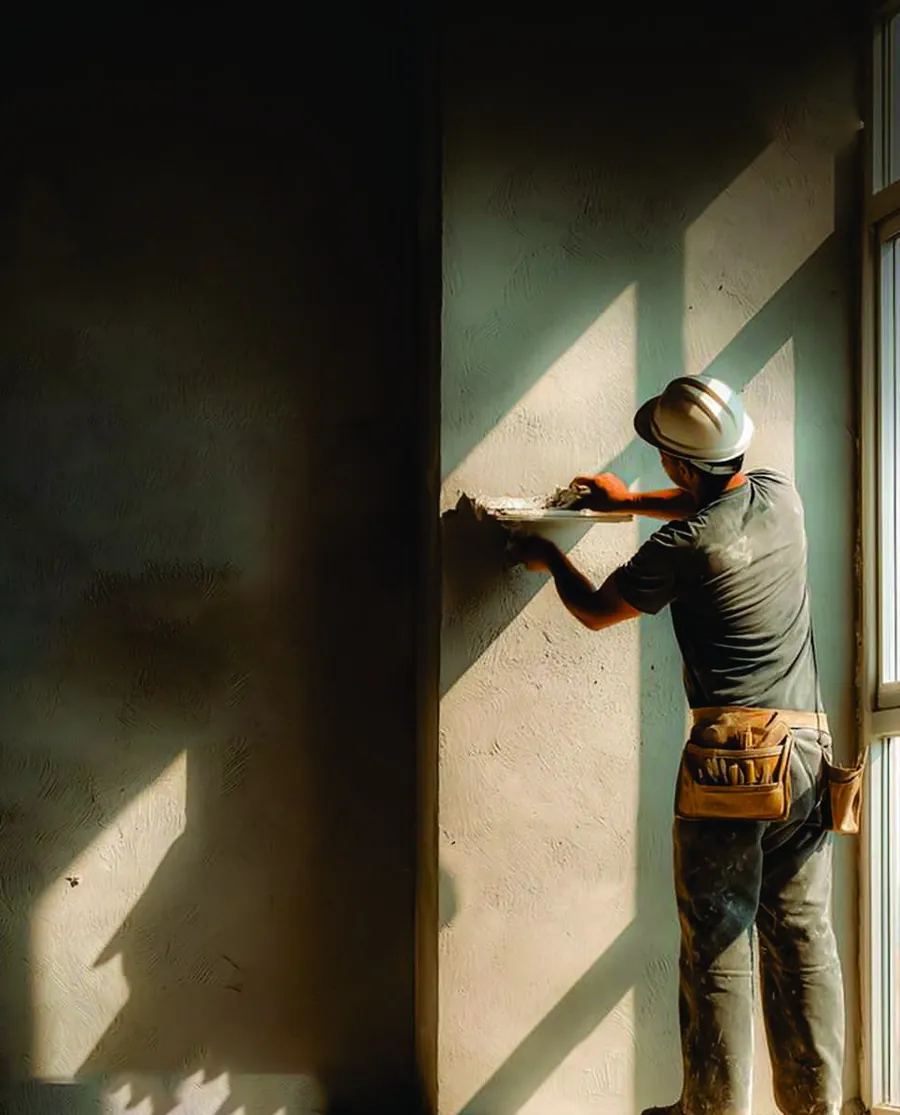

Marble, onyx, quartz and glass mosaic share one property: light passes partway into them. Whatever sits behind the material affects how it looks from the front. Fix translucent stone on grey adhesive and the grey reads through as a dull, patchy shadow — sometimes immediately, more often over the following weeks as moisture moves through the stone and carries cement colour with it.
What "non-staining" means
A white adhesive is made with white cement instead of grey OPC, and it is formulated to minimise soluble salts that can migrate into the stone and leave a mark. Together those give you a bedding layer that stays invisible from the face side.
Where white is not optional
- White and light-coloured marble
- Onyx and other translucent stone
- Glass mosaic and glass tiles
- Quartz and engineered stone in light shades
- Light-coloured natural stone cladding
- Thin large-format porcelain in white and pale shades
Where grey is perfectly fine
- Ceramic and vitrified tiles in mid and dark shades
- Granite and dark natural stone
- Any opaque, full-body tile where nothing reads through
- Screeds, backs of walls and areas you will never see
Match the type as well as the colour
White adhesives come in the same ladder of strengths as grey. T1 for small light-coloured tiles, T2 for medium tiles, marble, glass mosaic and light natural stone on interior and exterior walls and floors, T3 for large-format porcelain, heavy stone, façades, terraces and swimming pools. Picking white but dropping a type is the same mistake in a different direction.
Working with marble
- Do not soak the stone. Marble is sensitive to moisture and will show water marks.
- Use a full bed and back-butter larger slabs — voids under stone show as shadows as well as being structurally weak.
- Keep adhesive off the face, and clean any smears immediately with a damp sponge rather than scrubbing later.
- Let the bed cure fully before grouting, and use a grout colour tested on a sample first.
The cost question
White adhesive costs more per bag than grey. Set that against the cost of lifting stained marble: the stone itself, the labour, the delay, and the fact that the replacement slab rarely matches the veining of the original batch.
Read next
- Tile Adhesive vs Cement Mortar: Which Is Better for Fixing Tiles?
- Tile Adhesive Type 1, Type 2 and Type 3: What the Difference Actually Means
- Tile Adhesive Coverage: How Many Bags per 100 sq ft?
Browse the full EMMA product range, check the application guide, or ask our technical team about your site.