
Baarish mein tiling karni hai?
Monsoon tiling: working on damp walls and floors
SOL 10 · Updated 26 November 2026 · EMMA Technical Desk
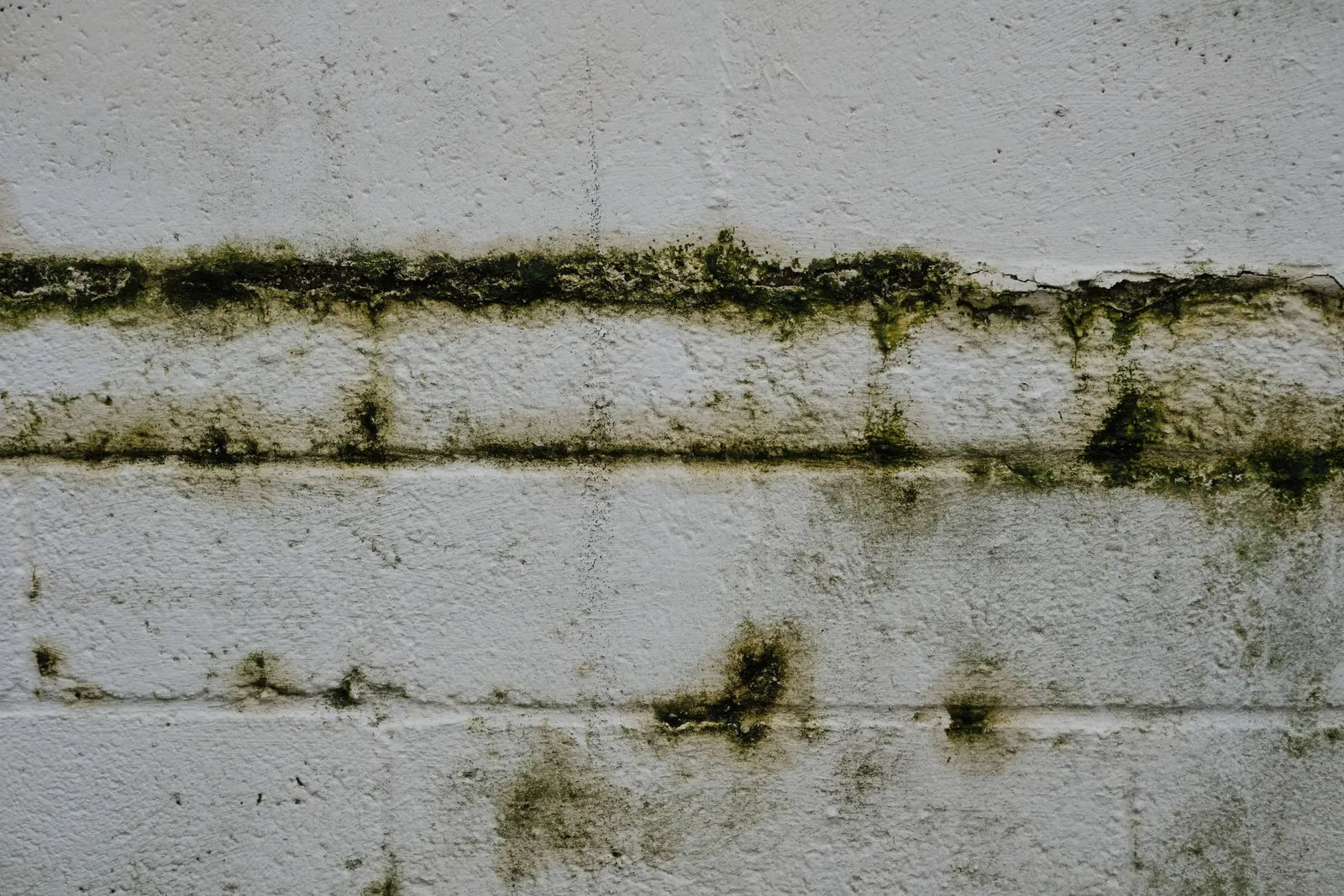
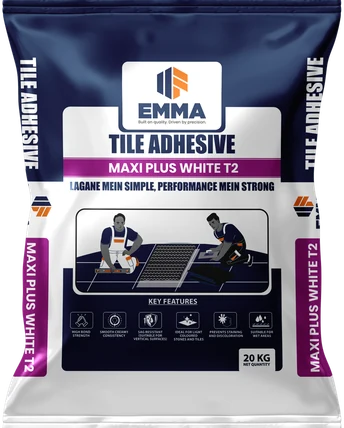
Stock photo for illustration only.
Short answer. Tile in the monsoon only on a surface that is sound, clean and dry, as EMMA's Classic Grey method requires, and keep rain off the work while it cures. A wall that is wet through, has water seeping in or keeps growing moss has a moisture problem to fix first. Use a polymer-modified adhesive mixed with clean water only, such as EMMA Classic Grey T2 indoors and Classic Grey T3 or Maxi Plus White T3 on exposed exterior walls and terraces.
Why it happens
The Northeast monsoon is long and heavy, and work cannot stop for months. Tiling still goes ahead in the rains, but the materials behave differently. A wet wall or floor waters down the adhesive at the contact face, so the bond forms in a thin, weak layer. Cold, humid air slows curing. A sudden shower washes fresh adhesive out of exterior joints before it sets.
Moisture also travels. A wall soaked by driving rain keeps feeding water into the bed after the tiles are on, and that water carries salts to the joints as white deposits. Moss and algae on a wall show that it stays wet for long periods, and a tile bed laid over that growth bonds to the growth.
Materials suffer on site too. Cement-based powders take up moisture from the air. EMMA's catalogue gives the tile adhesives a shelf life of 6 months from manufacture in dry storage and says to keep the bags in a cool, dry place, sealed. A bag left open on a wet floor goes lumpy and loses performance.
Grade choice follows exposure. Indoors, a kitchen or bathroom floor in a damp season is well within what Classic Grey T2 is listed for. Outdoors, a terrace or elevation that takes driving rain needs the grades listed for that exposure: Classic Grey T3, which the catalogue lists for heavy rain and direct sunlight, or Maxi Plus White T3 for terraces and facades.
The adhesive is only one part of a monsoon job. Waterproofing, slopes on terraces and balconies, and complete grout joints decide whether rain stays out of the bed once the tiles are on. A sound adhesive under open joints still sits in water for months.
Labour planning helps as well. Mix only as much adhesive as the team can lay within its open time, because humid air and stops for rain make it easy to leave a mixed batch standing until it is past its pot life.
When to wait for a dry spell
Postpone the work if water is seeping through the wall, if the floor has standing water, if moss and algae are still growing, or if an exterior wall cannot be covered from rain. Fix leaks, clean off the growth and let the surface dry first. Interior rooms can often go ahead while exterior work waits.
Step-by-step fix
- Store the bags dry. Keep bags sealed, off the floor on pallets or planks, under cover and away from walls that get wet. Use older stock first.
- Plan around the rain. Do exterior walls and terraces in dry spells and move interior work to rainy days. Keep tarpaulins ready for any area open to the sky.
- Judge the surface. Tape a square of plastic sheet to the wall or floor overnight. If droplets form under it or the surface darkens, it is still too wet to tile.
- Clean off growth and salts. Scrub moss, algae and white salt deposits off the surface, rinse, and let it dry again before you start.
- Mix with clean water only. Use clean water, not rainwater collected from the roof or a muddy drum. Add no cement or sand. Use the mix within its pot life of 2–2.5 hours and lay tiles within the open time of 30–35 minutes.
- Protect the fresh work. Cover exterior tiling until it has cured. The Maxi Plus White T3 method says to protect the work from rain during application.
- Give it time. The Classic Grey method allows 24–72 hours of curing, depending on traffic, before grouting or use. In cold, humid weather, stay at the longer end.
Recommended EMMA products
These grades are the ones EMMA's catalogue lists for this job. Pick by tile type and where it is going.
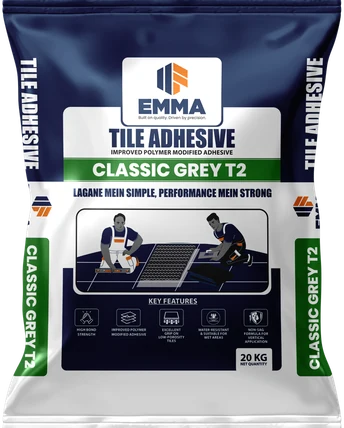
Classic Grey T2
Indoor and outdoor floors and walls in moderate-traffic areas. Water resistant for kitchens, bathrooms and balconies.
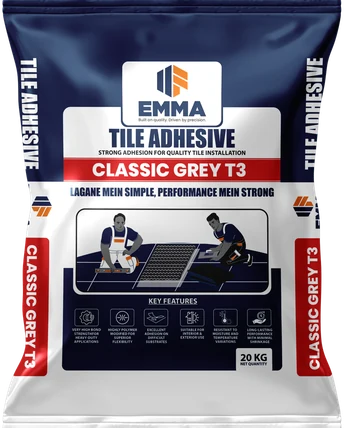
Classic Grey T3
Listed for extreme weather exposure, heavy rain and direct sunlight, on exterior walls and high-traffic areas.
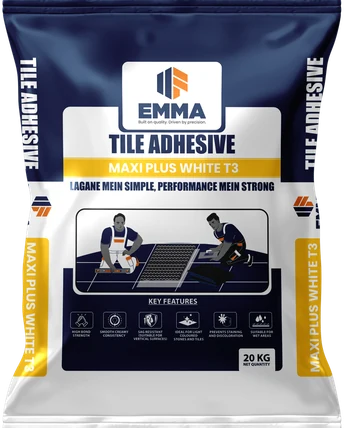
Maxi Plus White T3
A white grade for terraces, facades and wet areas, and for marble and light stone outdoors.
What EMMA does not cover. EMMA does not make waterproofing, damp-proofing, anti-fungal washes or rain covers. A wall with water seeping through it, or moss and algae growing on it, needs the leak stopped, the growth cleaned off and the wall dried before tiling. EMMA adhesive is for the tiling once the surface is ready.
Key facts
- Surface (Classic Grey method)
- Sound, clean, dry; free from dust, oil and loose particles
- Storage
- Cool, dry place · sealed bag
- Shelf life
- 6 months from manufacture, dry storage
- Open time
- 30–35 mins
- Pot life
- 2–2.5 hrs
- Curing (Classic Grey)
- 24–72 hours before grouting / use
- Rain (Maxi Plus White T3 method)
- Protect from rain during application
- Exposed exteriors
- Classic Grey T3 or Maxi Plus White T3
Figures from the EMMA product catalogue 2026-27. Coverage and timings are indicative and depend on substrate, applicator and weather.
 AAC Block Joining Mortar
 Wall Putty
 Classic Grey T1
 Maxi Plus White T1
 Maxi Plus White T2