
Marble par daag ya peelapan?
Stains and yellowing on marble and white stone
SOL 06 · Updated 26 November 2026 · EMMA Technical Desk
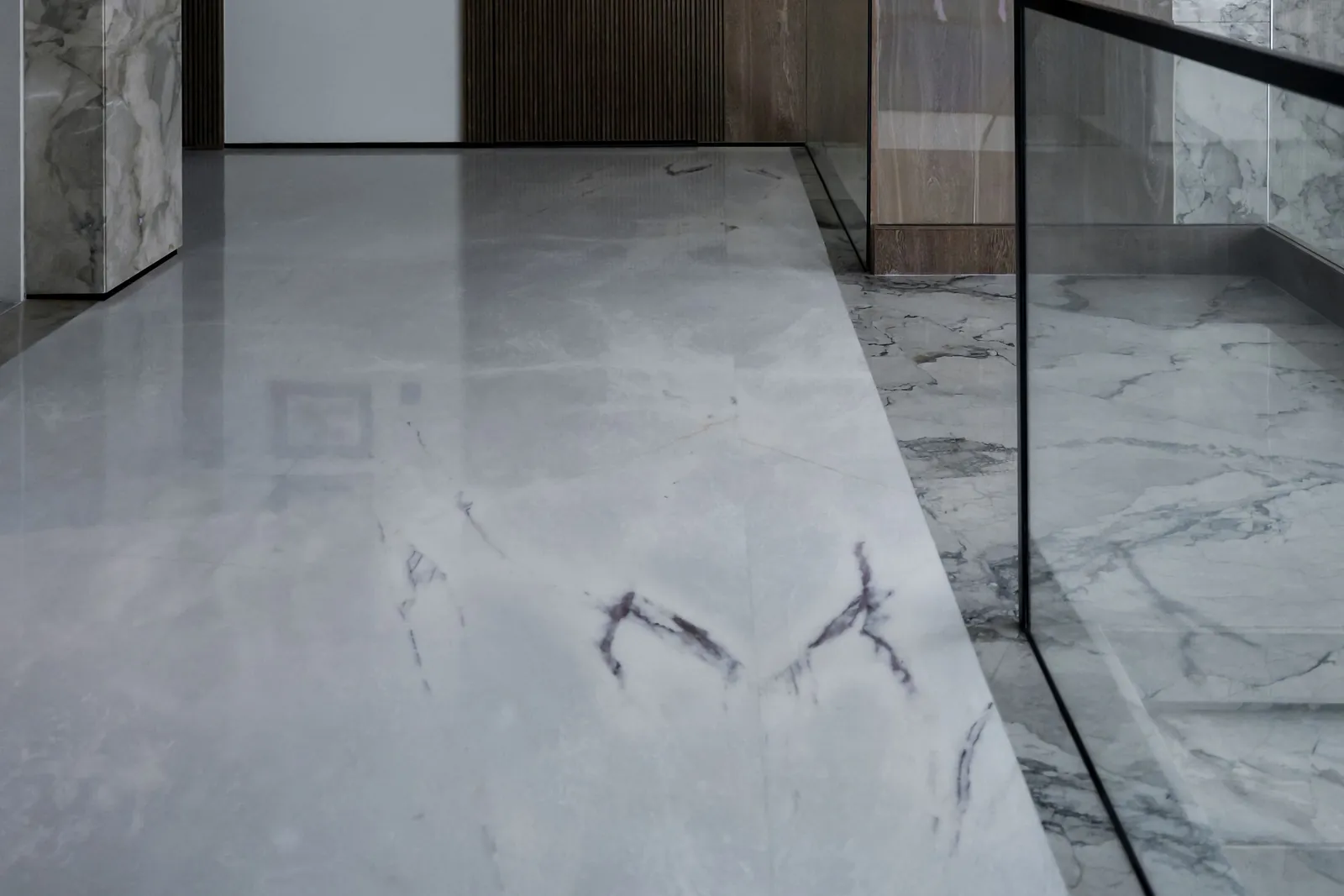
Stock photo for illustration only.
Short answer. Grey shadows, damp patches and yellowing on white marble often come from underneath: grey cement or grey adhesive showing through the stone, or water carrying salts up from a wet bed. EMMA makes nothing that removes stains from marble that is already laid, so existing stains need a stone-care specialist or relaying. For new or relaid white marble and light stone, use a white, non-staining adhesive such as EMMA Maxi Plus White T2 or Maxi Plus White T3.
Why it happens
White marble and many light stones are slightly translucent and porous. Light passes a little way into the stone, so whatever sits directly underneath affects the colour you see. A grey bed of cement or grey adhesive can show through as a dull shadow, sometimes in the exact pattern of the trowel lines or mortar dabs under the slab.
Water makes it worse. A stone laid on a thick, wet mortar bed draws moisture up through itself as the bed dries. That water carries dissolved salts and impurities, and when it evaporates at the surface it leaves them behind as white deposits or brownish stains. The same thing happens later if water keeps reaching the bed from a leak or a wet terrace.
Some stains come from above. Marble is soft and stains from coloured liquids such as tea, oil or turmeric. Acids in lemon juice, some floor cleaners and toilet cleaners react with the calcium carbonate in the stone and leave dull etched marks that look like stains but are damage to the surface.
Telling these apart decides the fix. A stain that wipes off or fades with gentle cleaning sat on the surface. A dull, rough patch where the polish has gone is etching, which a stone polisher can sometimes restore. A shadow or tide mark that no cleaning touches is coming from the bed, and only relaying changes that. Treat any stain near a bathroom, kitchen or terrace edge as a possible moisture problem until you have ruled it out.
For new work the choice of bed is the cheapest protection. EMMA's Maxi Plus White grades are white and non-staining, and the catalogue lists white marble and light-coloured stone among their uses. Laying white marble on grey cement to save money on the bed risks relaying stone that costs far more than the adhesive.
Light grout matters for the same reason. A dark grout can bleed colour into the edges of a porous white stone, so pick a grout colour close to the stone and test it on an offcut first.
When cleaning will not help
If the discoloration matches the pattern of the bed, or a stone has a shadow you cannot reach with any surface treatment, the cause is under the slab. No surface cleaner changes what is underneath. The stone has to be lifted and relaid on a white bed, after the source of any moisture is fixed.
Step-by-step fix
- Work out the stain type. Note whether the mark follows the bed pattern, sits near a wet area, wipes off, or is a dull etched patch. Clean one small area with plain water and a soft cloth before trying anything stronger.
- Get specialist advice for laid stone. Removing deep stains from marble needs a stone-care specialist. Avoid acidic cleaners and harsh scouring, which damage the polish.
- Fix the moisture source. If damp is feeding the stain, stop the leak or waterproof the area before relaying any stone.
- Check the stone before laying. Inspect the back of each slab. If it carries a resin or mesh backing, confirm with the stone supplier that it is suitable for a cement-based adhesive.
- Lay on a white bed. Mix Maxi Plus White T2 or T3 with clean water only and add nothing else. Spread it with a notched trowel and lay within the open time of 30–35 minutes. With T3, back-butter slabs larger than 600 × 600 mm.
- Keep the face clean. Wipe any adhesive off the polished face with a damp sponge straight away, before it sets.
- Grout with a light grout. With Maxi Plus White T3, grout after 24 hours. Use a light-coloured grout so the joints do not stain the stone edges.
Recommended EMMA products
These are EMMA's white grades. Pick by the size of the tile or slab and where it is going.
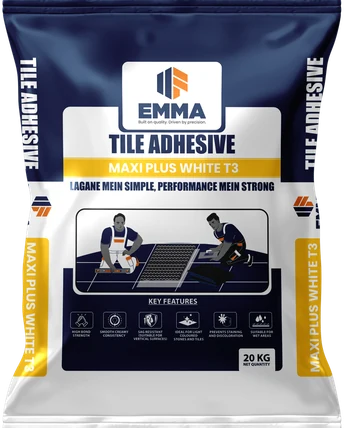
Maxi Plus White T3
Large-format porcelain, white marble, granite, engineered and quartz stone, including facades, terraces and wet areas. Brilliant white, non-staining.
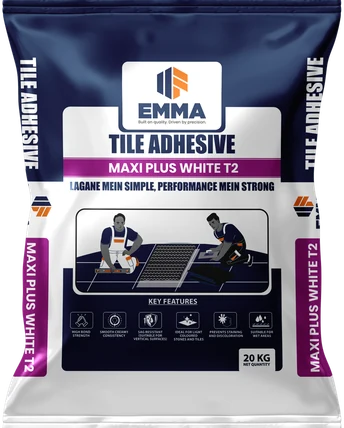
Maxi Plus White T2
White marble, glass mosaic and light-coloured natural stone with medium-sized tiles, in kitchens, bathrooms and balconies. Brilliant white, non-staining.
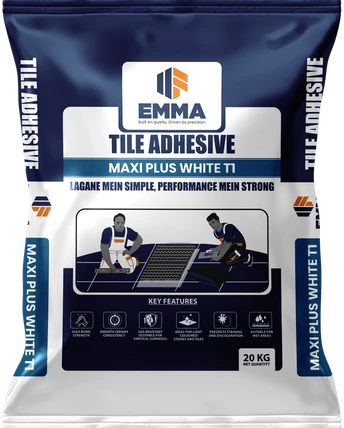
Maxi Plus White T1
Small, light-coloured tiles and stones on interior walls and floors. Its catalogue entry says it prevents staining and discoloration.
What EMMA does not cover. EMMA does not make stone cleaners, poultices, polishing compounds or sealers, and has no product that removes stains from marble that is already laid. For existing stains, consult a stone-care specialist or relay the affected stones. EMMA white adhesive is for the relaying and for new work.
Key facts
- EMMA grades for white marble
- Maxi Plus White T2, Maxi Plus White T3
- Small light-coloured tiles
- Maxi Plus White T1, interior
- Not under white marble
- Classic Grey T1, T2, T3
- Bed colour
- Brilliant white, non-staining (T2, T3)
- Open time
- 30–35 mins
- Pot life
- 2–2.5 hrs
- Back-buttering (Maxi Plus White T3 method)
- Slabs larger than 600 × 600 mm
- Grouting (Maxi Plus White T3)
- After 24 hours
- Stain removal on laid stone
- Not an EMMA product
Figures from the EMMA product catalogue 2026-27. Coverage and timings are indicative and depend on substrate, applicator and weather.
 AAC Block Joining Mortar
 Wall Putty
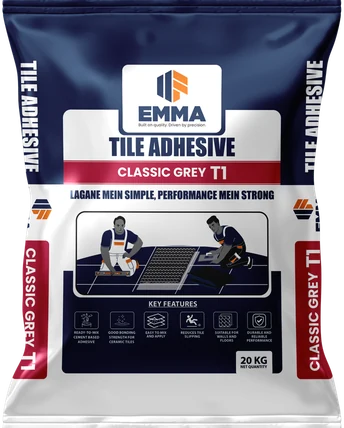 Classic Grey T1
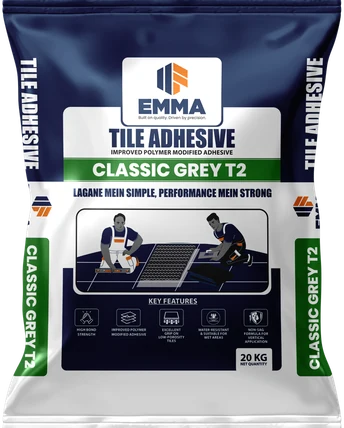 Classic Grey T2
 Classic Grey T3