
AAC block ki deewar mein daraar?
Cracks in AAC block walls
SOL 08 · Updated 26 November 2026 · EMMA Technical Desk
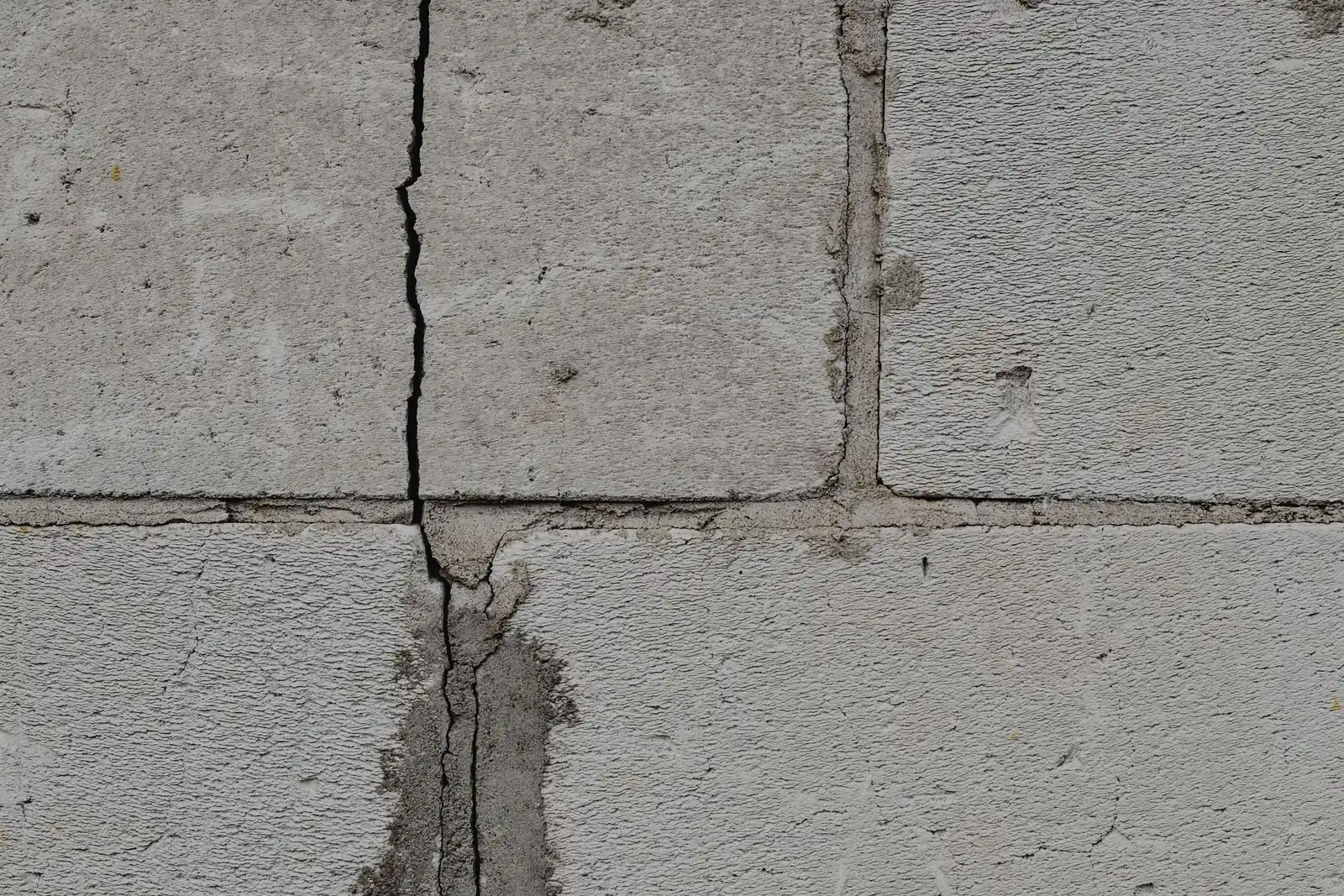
Stock photo for illustration only.
Short answer. Cracks in AAC block walls usually come from movement the wall was not built to absorb: blocks laid wet or on thick cement-sand joints, walls built tight under a beam before the frame settled, and no bond beam or joint reinforcement near openings. A crack that runs through blocks, keeps widening or appears at a beam or column needs an engineer's check before any repair. For rebuilt sections and new walls, EMMA AAC Block Joining Mortar lays the blocks on a 2–3 mm thin bed with no water curing.
Why it happens
AAC blocks are light, accurate in size and full of tiny air cells. They also move a little as they take up and lose moisture. If a wall is built from blocks that were soaked, or laid in the rain, the blocks shrink as they dry out, and the joints are where that shows.
IS 6041, the Indian code of practice for autoclaved cellular concrete block masonry, has a whole clause on avoiding cracks. It points to movement of the frame around the wall from load, settlement, temperature and moisture. Its precautions include delaying partition walls until the frame has taken its load, a slip joint where a wall meets a beam or column that may deflect, controlling the moisture content of blocks at the time of laying, bond beams or joint reinforcement, and control joints.
Joint thickness matters too. AAC blocks are made to close tolerances, so they can be laid on a thin bed. A thick cement-sand joint carries a lot of mixing water and shrinks as it dries. A 2–3 mm polymer-modified bed, which EMMA's catalogue describes as crack-resistant, keeps the joint small.
Plaster and finish add their own cracks. Plaster laid on a wall that is still drying out, or plaster that is too thick and dries too fast, shows fine map cracks that have nothing to do with the blocks. These stay in the finish and can be dealt with when you repaint. Cracks that line up with the block joints, or follow the line where a wall meets a beam or column, are coming from the wall.
Timing is the other part. Some fine cracking is expected as a new building dries out and the frame takes its load, which is why IS 6041 asks for partition walls to be delayed, where possible, until the frame has taken its load. Repair such cracks once, after they have stopped growing. That holds better than filling them again and again while they move.
New walls can avoid most of this. Store blocks off the ground and covered, lay them dry or only lightly dampened, keep joints thin, and leave the top of each wall for last.
When to call a structural engineer
Get a structural engineer to look before any repair if a crack runs diagonally through several blocks, is wider at one end than the other, keeps growing after you mark it, appears at a beam, column or slab edge, or comes with doors and windows that start to stick. Filling these cracks hides a problem in the structure.
Step-by-step fix
- Map and mark. Note where each crack runs: along the joints, through the blocks, at the top of the wall or around openings. Pencil a line across each end with the date, and check it again after a few weeks.
- Separate finish cracks from wall cracks. Fine cracks in the plaster or putty alone are finishing problems. Cracks that follow the block joints or cut through blocks are in the wall itself.
- Repair hairline joint cracks. Once the crack has stopped moving, rake it out, clean the dust, and fill it with a suitable repair material before replastering. Mesh across the crack in the new plaster helps spread stress.
- Rebuild what is damaged. Take down badly cracked sections. Clean the blocks of dust and loose particles and lightly dampen them only in hot, dry weather; never use soaked blocks.
- Lay on a thin bed. Mix EMMA AAC Block Joining Mortar with clean water, mechanically, to a smooth paste. Spread a uniform 2–3 mm bed on the horizontal and vertical faces with a notched trowel.
- Set, level and clean. Tap each block into place with a rubber mallet and check line and level with a spirit level and string line (line dori). Remove excess mortar before it sets. No water curing is required.
- Leave a gap at the top. Stop the wall short of the beam or slab above and fill the gap with a resilient material, as IS 6041 describes, so the frame can deflect without cracking the wall.
Recommended EMMA products
EMMA products for rebuilding and finishing the wall. Neither one repairs a structural crack.
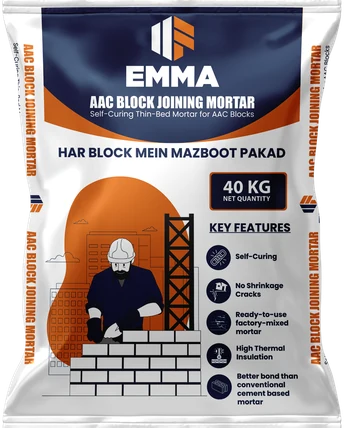
AAC Block Joining Mortar
A thin-bed jointing mortar for AAC, fly-ash and lightweight blocks and bricks, on internal and external walls. A 2–3 mm bed mixed with clean water only. No water curing needed.
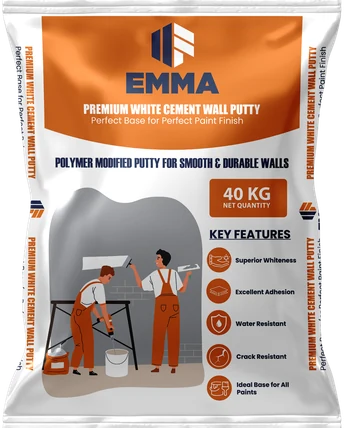
Wall Putty
For the finish after the wall and plaster are repaired: it fills micro-cracks and levels plaster before paint. It does not bridge a crack that is still moving.
What EMMA does not cover. EMMA does not make structural crack repair products, plaster, wire mesh or movement-joint sealants. A crack through the blocks or at a beam needs an engineer's assessment and repair with suitable materials. EMMA AAC Block Joining Mortar is for laying blocks, and EMMA Wall Putty is a finishing coat over sound plaster.
Key facts
- Bed thickness
- 2–3 mm
- Product type
- Polymer-modified thin-bed jointing mortar
- Mixing
- Clean water only
- Curing
- Not required
- Compatible units
- AAC, fly-ash and lightweight blocks / bricks
- Conformity
- IS 2250 · ASTM C1660/C270 · IS 6041
- Pack size
- 40 kg
- Coverage
- Not stated in EMMA's catalogue
- Wall putty coat thickness
- 1–1.5 mm
Figures from the EMMA product catalogue 2026-27. Coverage and timings are indicative and depend on substrate, applicator and weather.
 Classic Grey T1
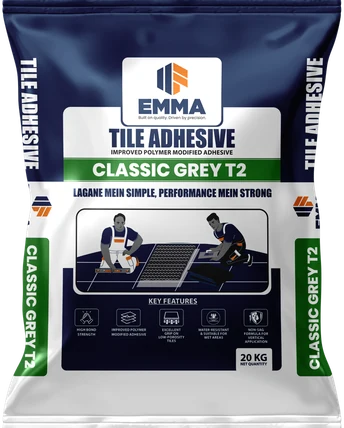 Classic Grey T2
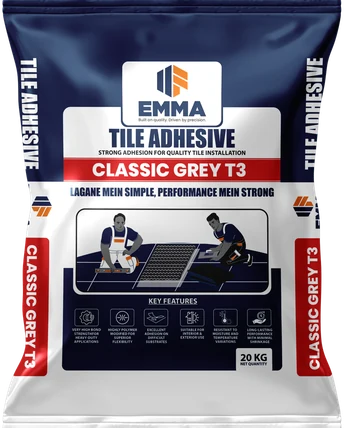 Classic Grey T3
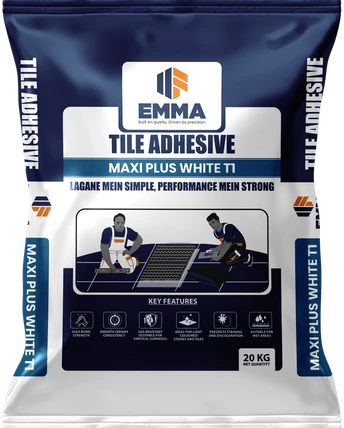 Maxi Plus White T1
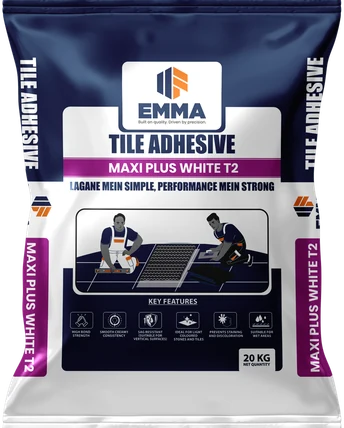 Maxi Plus White T2
 Maxi Plus White T3