
Putty utar rahi hai, paint mein chhale?
Wall putty peeling and paint blistering
SOL 09 · Updated 26 November 2026 · EMMA Technical Desk
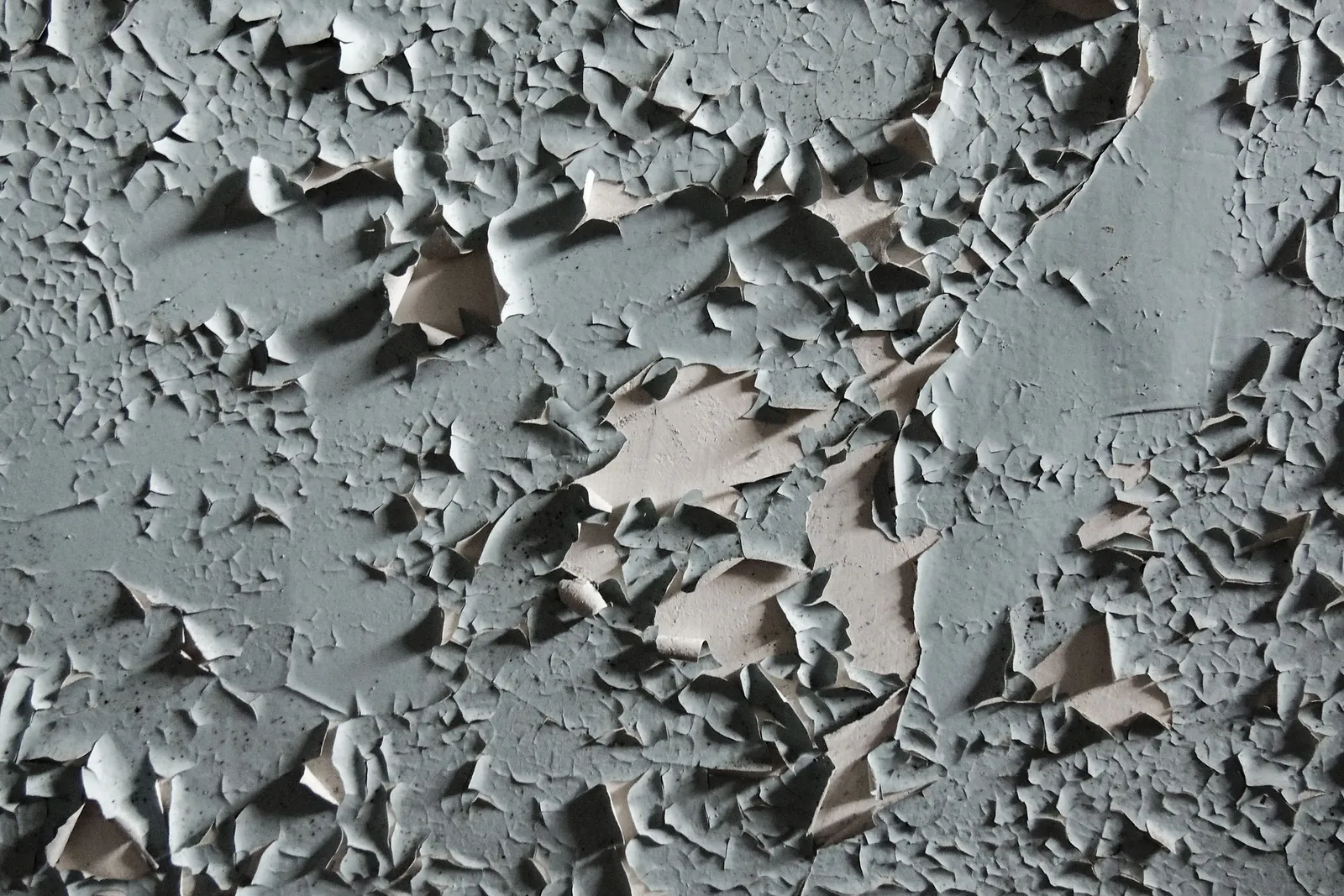
Stock photo for illustration only.
Short answer. Putty peels and paint blisters when moisture reaches the wall from behind or below, such as a leaking pipe, rising damp or rain soaking through an outside wall, or when the putty went onto a dusty or flaking surface. EMMA makes no product that stops damp, so find and fix the water source and let the wall dry out before anything else. Then scrape back to sound plaster and refinish with two thin coats of EMMA Premium White Cement Wall Putty, a primer and paint.
Why it happens
Paint and putty are thin layers. They stay on the wall only while the surface behind them is sound and reasonably dry. When water keeps arriving from inside the wall, it has to escape through the finish. Water vapour pushes the paint film up into blisters, and wet putty softens and loses its grip on the plaster.
Water also brings salts. As it moves through cement plaster it dissolves salts and carries them to the surface. When it evaporates, the salts crystallise behind the putty or paint and push it off in flakes and powder. The white fluffy deposit on a damp wall is that salt.
The rest are application faults. Putty laid over old distemper or loose paint sticks to the old coat, which then peels. Putty spread thicker than the catalogue's 1–1.5 mm coating thickness can crack as it dries. Paint applied before the putty has dried completely, or without a primer, does not bond well.
Outside walls in the Northeast take driving rain for months. If the wall has cracks, open joints around windows or a parapet without a proper top, rain soaks in and comes out through the inside finish. The damage often appears on the inside of an external wall, at the bottom of a wall near the floor, or below a bathroom or terrace. Where it appears is your best clue to where the water comes from.
New plaster brings the same risk. Cement plaster holds a lot of water when it is fresh. Putty and paint applied before it has dried out trap that water and can blister in the first season.
The pattern helps. Paint that bubbles in a band near the floor points to damp rising from below. Damage around a window or under a parapet points to rain getting in at that spot. A patch on a wall shared with a bathroom points to a pipe or the bathroom floor. Fine flaking over a large area of an otherwise dry wall usually points to the surface underneath: dust, old distemper or putty that was laid too thick.
When to wait before refinishing
Do not putty a wall that is still damp, still showing fresh salt deposits, or still darkening after rain. New putty and paint over an active damp problem peel again. Fix the water source, give the wall time to dry, and check that the damp patches have gone.
Step-by-step fix
- Find the water. Check for concealed pipes in the wall, a bathroom or kitchen on the other side, a leaking roof or parapet, gaps around windows, and damp rising from the floor. The pattern of the damage usually points to the source.
- Fix it and let the wall dry. Repair the leak or treat the damp with suitable materials. Drying can take weeks, longer in the monsoon. Keep the room ventilated.
- Scrape back to sound plaster. Remove all loose putty, blistered paint and salt deposits with a scraper and a stiff dry brush. Hollow or crumbling plaster needs repair before putty.
- Prepare the surface. Rub the wall with your palm: if it leaves white powder or salt on your hand, brush and clean again. Press a scraper into the plaster at a few spots; if it crumbles, repair that patch first. The surface should be clean and dust-free. EMMA's method calls for it to be slightly damp at application, so lightly moisten the dry wall just before you start.
- Mix and apply the first coat. Mix EMMA Wall Putty with 35–40% clean water to a smooth, lump-free paste and use it within its pot life of 2–3 hours. Apply the first coat evenly with a putty blade and let it dry for 4–6 hours.
- Second coat and sanding. Apply the second coat and let it dry completely. Keep each coat within 1–1.5 mm. Sand lightly for a smooth finish.
- Prime, then paint. Apply a primer suited to the paint, then the finish coats. Putty is not a primer.
- Watch the first monsoon. Check the repaired wall through the next rainy season. If the damp patch returns, the water source has not been fully fixed and needs another look before the next repaint.
Recommended EMMA products
EMMA's wall putty, for refinishing once the wall is dry and sound.
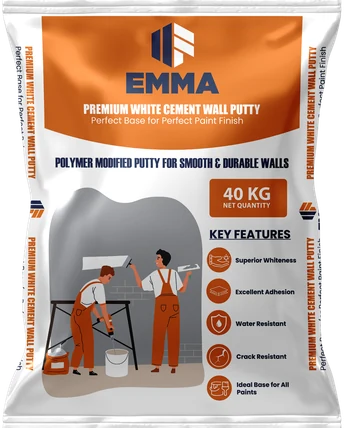
What EMMA does not cover. EMMA does not make waterproofing, damp-proofing or salt treatments, primers or paint. Curing the damp behind the putty, whether a leak, rising damp or rain coming through an outside wall, needs suitable materials and time to dry. Apply EMMA Wall Putty only after that, on sound plaster.
Key facts
- Fix first
- The source of damp
- Coats
- Two
- Coating thickness
- 1–1.5 mm
- Water demand
- 35–40%
- Drying between coats
- 4–6 hours
- Pot life
- 2–3 hrs
- Coverage (indicative)
- 15–18 sq ft per kg, 2 coats
- Standard
- IS 17545:2021
- Not a
- Waterproofing coat or primer
Figures from the EMMA product catalogue 2026-27. Coverage and timings are indicative and depend on substrate, applicator and weather.
 AAC Block Joining Mortar
 Classic Grey T1
 Classic Grey T2
 Classic Grey T3
 Maxi Plus White T1
 Maxi Plus White T2
 Maxi Plus White T3