
Tiles se khokhli awaaz aa rahi hai?
Hollow-sounding tiles: find them, then relay them
SOL 07 · Updated 26 November 2026 · EMMA Technical Desk
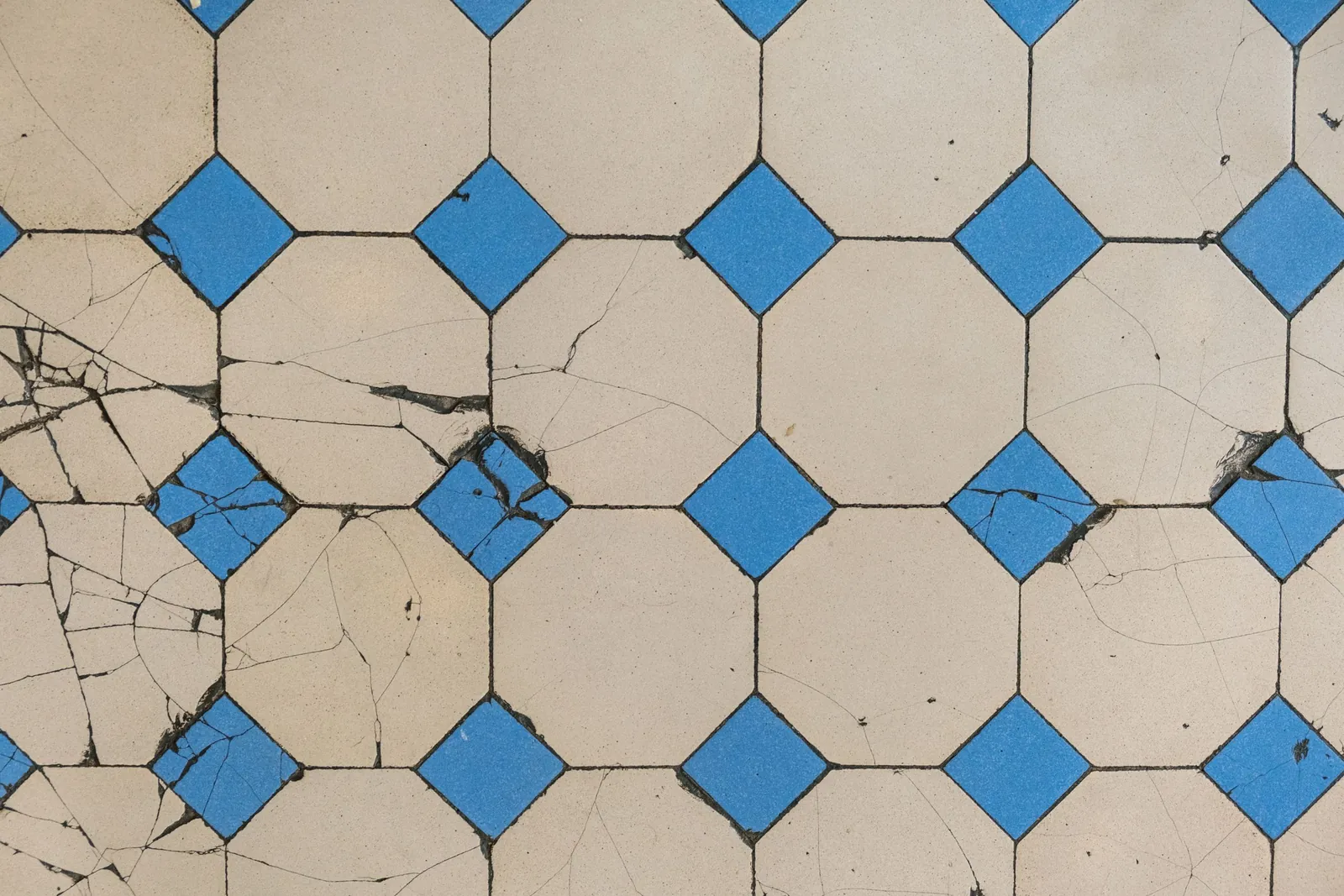
Stock photo for illustration only.
Short answer. A tile sounds hollow when there is an air gap between the tile and the floor or wall, usually from spot fixing with cement mortar, an adhesive bed that skinned over before the tile went down, or too little adhesive under the edges. A tile that rocks, cracks or sits in a group of hollow tiles should be lifted and relaid in a full bed of tile adhesive. Use the EMMA grade that suits the tile: Classic Grey T1 for small ceramic tiles indoors, Classic Grey T2 for larger ceramic and vitrified tiles, and Classic Grey T3 for large-format tiles and stone.
Why it happens
Tap a solid tile and it clicks. Tap a tile with air underneath and it gives a dull, drummy note, because the tile is vibrating over a void. The void is the real problem. That part of the tile carries load without support, so a dropped pot, a heavy cupboard or years of footsteps crack it.
The voids come from how the tile was laid. Cement mortar placed in dabs holds a tile at a few points. Adhesive spread over too large an area dries on top before the tiles are pressed in, and the tile sits on ridges instead of a bed. A small trowel notch under a big tile leaves gaps at the edges. Mortar that dries out too fast on a hot, dusty slab never bonds to it at all.
Some hollowness appears later. A floor laid tight to the walls with no movement gap can push itself up as it expands. Water from a leak or a wet bed weakens the bond over time.
Grade matters when you relay. A small ceramic tile in a dry room is an easy job for a basic polymer-modified adhesive. A large vitrified tile, a stone slab or an outdoor floor needs more bond strength and flexibility, which is what the higher grades in IS 15477 are for. Relaying a large tile with a grade meant for small ones invites the same hollow sound back.
Hollow walls deserve more urgency than hollow floors. A wall tile with no bond can drop off, and on a staircase wall or an exterior that can hurt someone.
Hollow tiles are easy to find before anyone moves in. Tap a new floor yourself before the final payment, or ask the contractor to do it with you. Lifting and relaying a few tiles at handover costs far less than repairing a cracked floor in a furnished home.
When to leave a hollow tile alone
On a floor, a single hollow tile that is not cracked, does not rock and sits away from heavy traffic can be marked and watched. Lifting it risks damaging the tiles around it. Relay it when it cracks, rocks, or when the hollow area starts to spread. Hollow wall tiles are different: they can fall, so relay them.
Step-by-step fix
- Sound and map. Tap every tile with a coin, a rubber mallet or a steel rod and mark the hollow ones with chalk. Note whether they are isolated or in groups.
- Find out why. Look for a leak nearby, a missing gap at the walls, or a floor that is cracked under the tiles. Fix that cause first or the relaid tiles will fail the same way.
- Lift the hollow tiles. Cut out the grout and lift each marked tile carefully. Clean the old mortar off the floor and the back of the tile until both are sound and free of dust.
- Mix the adhesive. Mix the EMMA grade with clean water only to a smooth, lump-free paste. Do not add cement or sand. Use the mix within its pot life of 2–2.5 hours.
- Relay in a full bed. Comb on adhesive with a notched trowel sized for the tile and lay within the open time of 30–35 minutes. Press and slightly twist each tile, then lift one to check the back is fully covered.
- Leave a gap at the walls. Keep a small gap at the edges of the room under the skirting so the floor can move.
- Cure before grouting. The Classic Grey method allows 24–72 hours of curing, depending on traffic, before grouting or use.
Recommended EMMA products
These grades are the ones EMMA's catalogue lists for this job. Pick by tile type and where it is going.
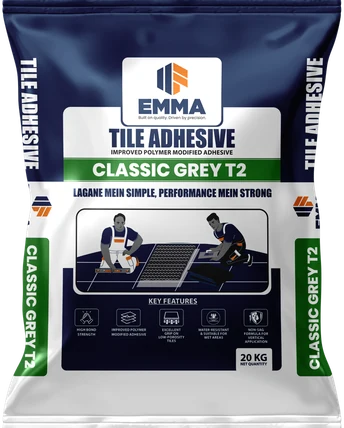
Classic Grey T2
Large ceramic and vitrified tiles generally up to 600 × 1200 mm, indoors and outdoors, moderate traffic.
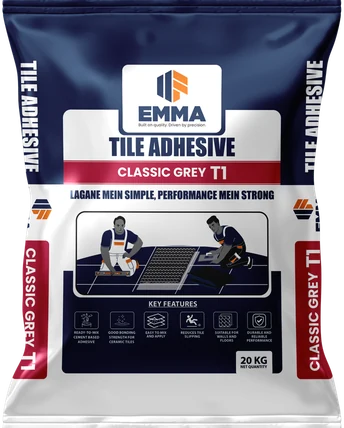
Classic Grey T1
Small ceramic wall and floor tiles in interior areas, generally up to 600 × 600 mm.
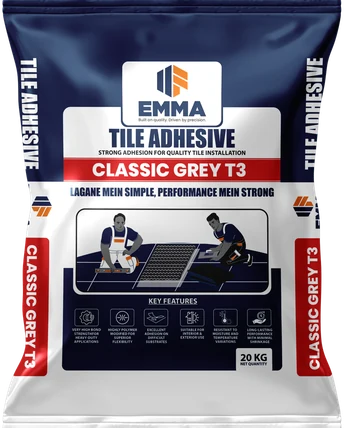
Classic Grey T3
Large-format vitrified tiles, natural stone, high-traffic floors and exterior walls.
What EMMA does not cover. EMMA has no injection product for refilling a hollow tile in place. Hollow tiles that need fixing have to be lifted and relaid, and EMMA adhesive is for the relaying.
Key facts
- Cause
- An air gap between tile and base
- Small ceramic tiles, indoors
- Classic Grey T1
- Tiles up to about 600 × 1200 mm
- Classic Grey T2
- Large-format tiles and stone
- Classic Grey T3
- Open time
- 30–35 mins
- Pot life
- 2–2.5 hrs
- Coverage (indicative)
- 20–30 sq ft per 20 kg bag
- Curing (Classic Grey)
- 24–72 hours before grouting / use
- Mixing
- Clean water only; no added cement or sand
Figures from the EMMA product catalogue 2026-27. Coverage and timings are indicative and depend on substrate, applicator and weather.
 AAC Block Joining Mortar
 Wall Putty
 Maxi Plus White T1
 Maxi Plus White T2
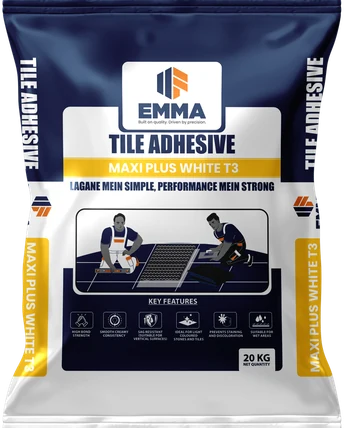 Maxi Plus White T3