
Pool ya tank mein tiles lagani hain?
Tiling a swimming pool or a water tank
SOL 04 · Updated 26 November 2026 · EMMA Technical Desk
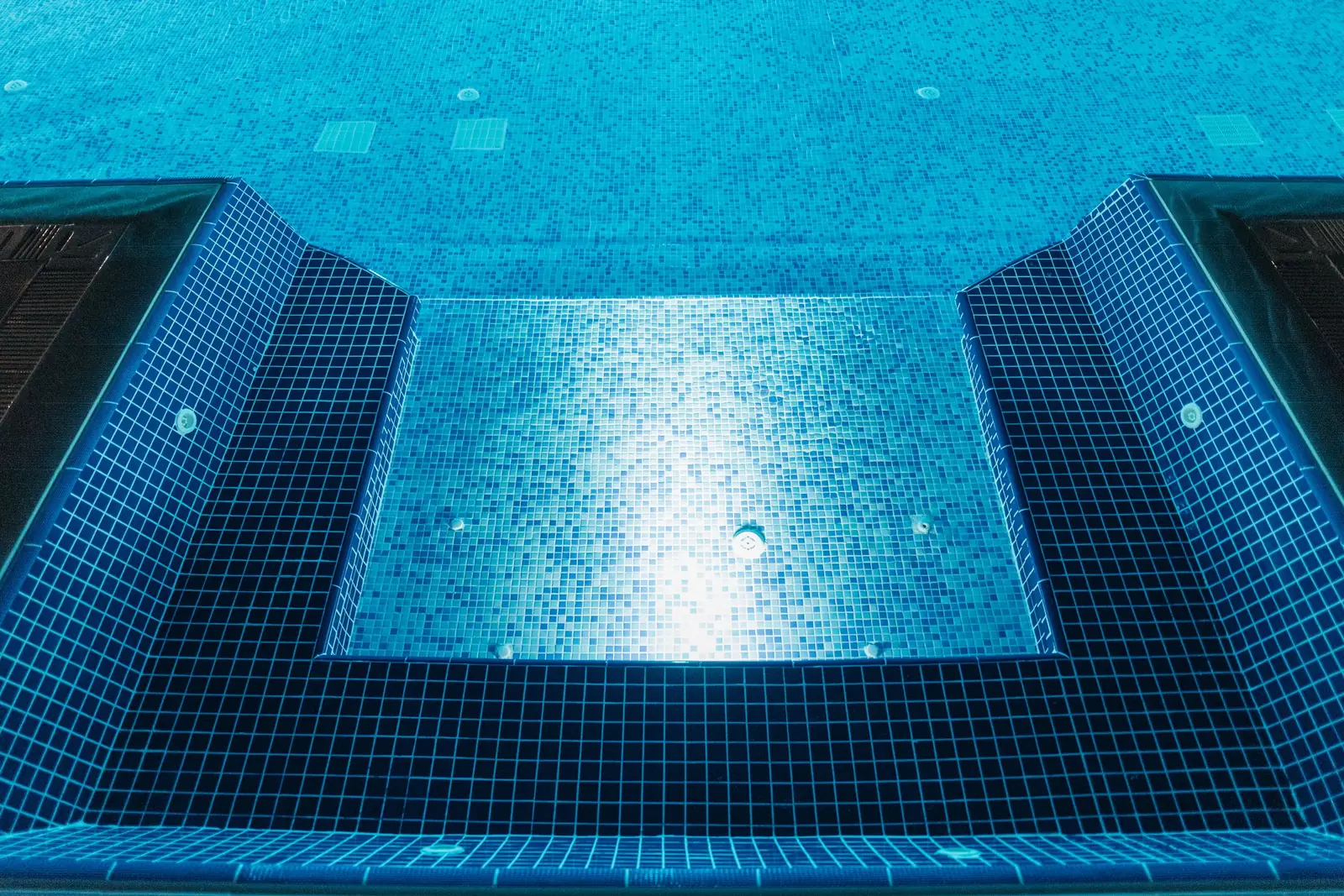
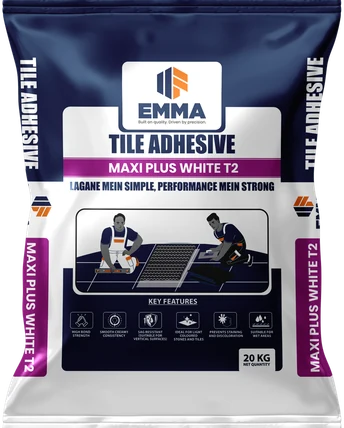
Stock photo for illustration only.
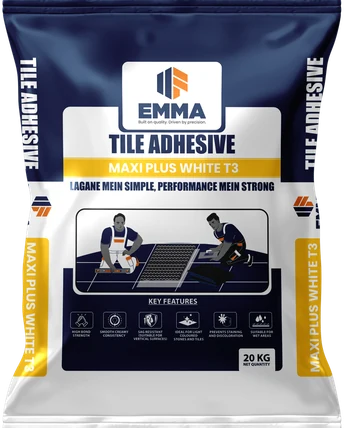
Short answer. A pool or water tank needs a cured, waterproofed and flood-tested shell before any tile goes on, because tiles and adhesive do not hold water back. For the tiling itself, Maxi Plus White T3 is the only EMMA grade the catalogue lists for swimming pools; it is white, non-staining and suits glass mosaic. EMMA's catalogue makes no claim about contact with drinking water, so check the lining requirements for a potable water tank separately.
Why it happens
A pool is the hardest place to keep a tile on. The shell holds tonnes of water against the tiles all the time, the water carries pool chemicals, and the structure moves as it is filled, emptied, heated by the sun and cooled at night. Any crack in the shell lets water travel behind the tiles, and the bed underneath is soaked for as long as the pool is full.
Most pool tiling failures start before the first tile. Concrete that has not cured shrinks and cracks under the finish. A waterproofing layer that was never flood-tested leaks into the structure below, and by then the only way to reach it is through the tiles. The adhesive is chosen last, and its job is narrow: to hold the tiles to a sound, waterproofed surface under water.
A water tank has the same problems on a smaller scale, plus one more. If people drink the water, everything in contact with it has to be suitable for drinking water. EMMA's catalogue lists Maxi Plus White T3 for swimming pools and wet areas. It does not say the product is approved for potable water.
Glass mosaic, the usual pool finish, adds its own demand. The small chips are translucent, so the colour of the bed shows through the glass, and a grey or patchy bed makes the pool look uneven under water. A white, non-staining bed keeps the colour of the mosaic true. That is one reason the pool listing sits on EMMA's white Type 3 grade.
Terraces and pool surrounds share many of these demands. They are wet for long periods, take full sun and move with the slab. EMMA's catalogue lists Maxi Plus White T3 for terraces as well, and the same order of work applies there: a sound slab, a fall that drains, waterproofing that has been tested, and only then the tiles.
Retiling an existing pool or tank
When tiles come off in a pool that is already in use, drain it fully and find out why before buying material. Tap the walls and floor to map every hollow area. If the tiles failed because water was getting behind them, the waterproofing has failed too, and it has to be repaired and flood-tested again before any retiling. Patching a few tiles over a leaking shell lasts until the next filling. If the shell is sound and only the bed failed, remove the loose tiles and their old adhesive back to a clean surface and retile as below.
Step-by-step fix
- Let the shell cure. Do not tile a fresh concrete shell. Give it the curing time the structural engineer specifies, and repair honeycombing and cracks first.
- Waterproof the shell. Apply a waterproofing system suitable for submerged use over the floor, walls, steps and every fitting, as its maker specifies.
- Flood-test before tiling. Fill the pool or tank, mark the water level and watch it for the period the waterproofing system calls for. Repair any loss, then drain and let the surface dry.
- Set out the tiles. Plan joints around lights, inlets and steps, and keep movement joints where the design shows them.
- Prepare the surface. Check that the waterproofed surface is sound, clean and dry, with no dust, loose material or film on top. Follow the waterproofing maker's guidance on whether its surface needs priming before tiling.
- Mix and spread. Mix Maxi Plus White T3 with clean water only; do not add cement or sand. Spread it with an appropriate notched trowel and lay tiles within the open time of 30–35 minutes. Back-butter tiles larger than 600 × 600 mm, as the T3 method states.
- Bed every tile fully. Press firmly to remove air pockets and use spacers for uniform joints. Protect the work from rain during application.
- Grout, then wait. Grout after 24 hours, with a grout made for submerged use. EMMA's catalogue does not give a time before filling, so follow the grout and waterproofing makers' instructions.
Recommended EMMA products
This is the only EMMA grade the catalogue lists for swimming pools.
What EMMA does not cover. EMMA does not make waterproofing, pool grout, sealants or any product approved for contact with drinking water. Waterproof and flood-test the shell with a suitable system, use a grout made for submerged use, and confirm potable-water approval for a drinking-water tank lining. Maxi Plus White T3 is for fixing the tiles.
Key facts
- EMMA grade for pools
- Maxi Plus White T3 (IS 15477:2019 Type 3)
- Not for pools
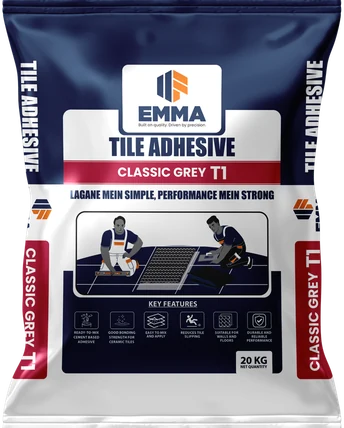
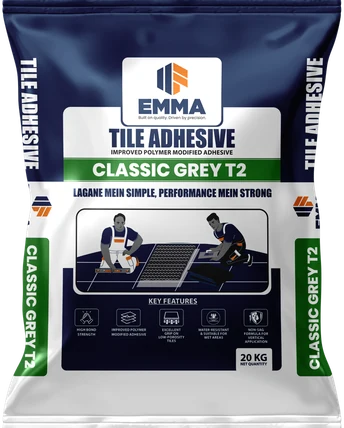
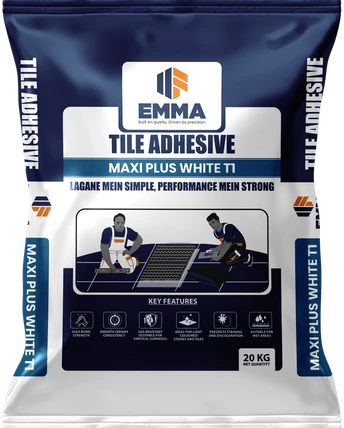
- Classic Grey T1, T2; Maxi Plus White T1, T2
- Before tiling
- Cured shell, waterproofed and flood-tested
- Open time
- 30–35 mins
- Pot life
- 2–2.5 hrs
- Back-buttering
- Tiles larger than 600 × 600 mm
- Grouting
- After 24 hours
- Time before filling
- Not stated in EMMA's catalogue
- Drinking-water contact
- Not claimed in EMMA's catalogue
Figures from the EMMA product catalogue 2026-27. Coverage and timings are indicative and depend on substrate, applicator and weather.
 AAC Block Joining Mortar
 Wall Putty
 Classic Grey T1
 Classic Grey T2
 Classic Grey T3
 Maxi Plus White T1
 Maxi Plus White T2